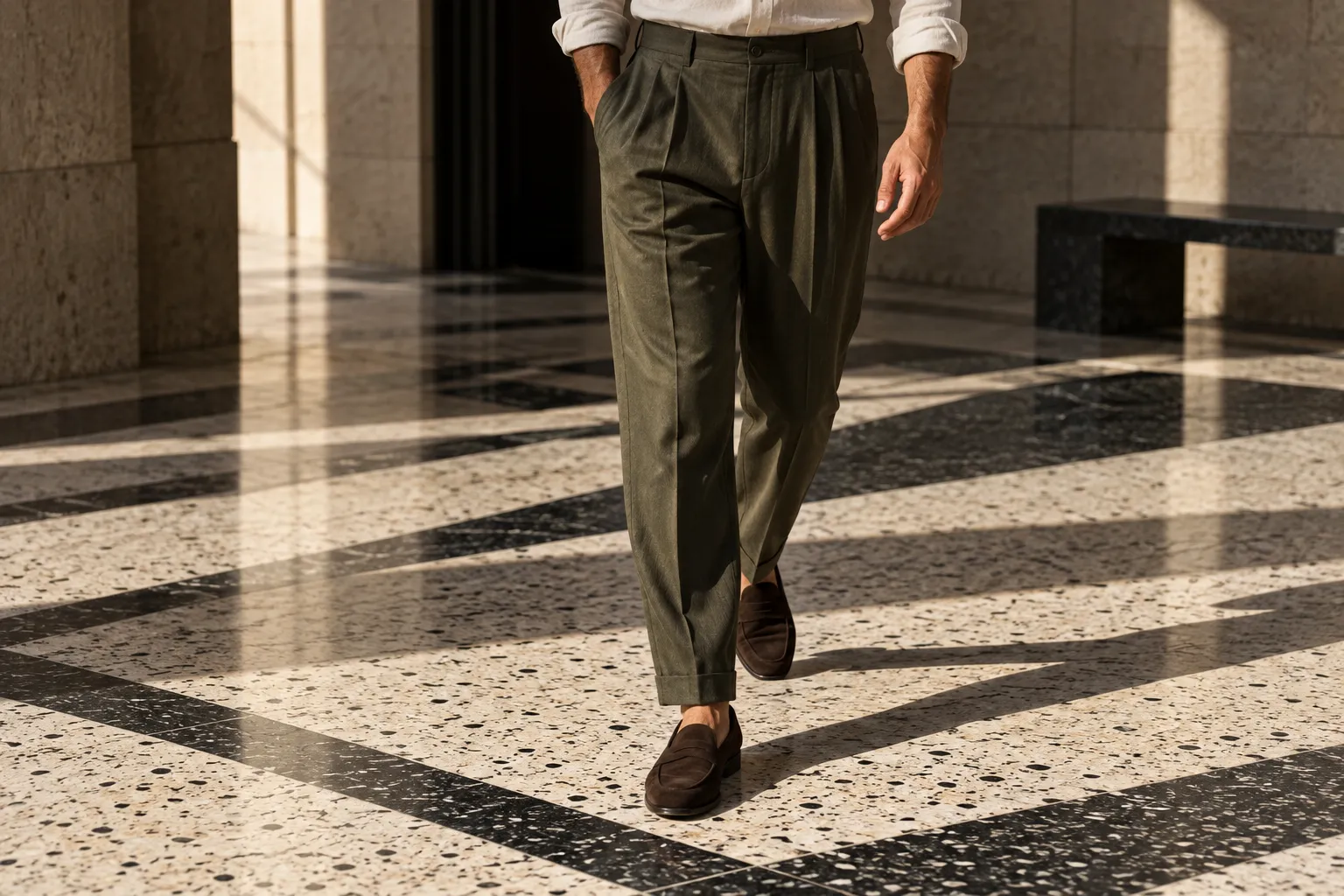
Fuller trousers work when three measurements agree: rise, thigh and hem. Increase only one and the shape looks accidental. Balance all three and the trouser creates a continuous line from waist to shoe.
Begin at the waist
A medium-to-high rise gives the fabric somewhere to fall from. The waistband should sit securely without a belt doing all the work. This also shortens the visible torso and gives a jacket or tucked knit a clearer relationship to the legs.
Add room where movement happens
The thigh needs enough ease for walking and sitting, but excess fabric should not pool beneath the seat. A single pleat can provide functional room while preserving a clean front. Wool cloth is especially forgiving because natural elasticity helps the shape recover after wear.
Finish with the hem
A hem around the shoe opening keeps a fuller leg grounded. Too narrow and the cloth catches on the calf; too wide and it can overwhelm a low-profile loafer. Ask for a light break first. It is easier to shorten later than to recover missing length.
The goal is not volume for its own sake. It is a line that lets the body move without advertising every movement.
Sources
- Superfine: Tailoring Black Style — The Metropolitan Museum of Art
- What is the Wool Fibre? — The Woolmark Company