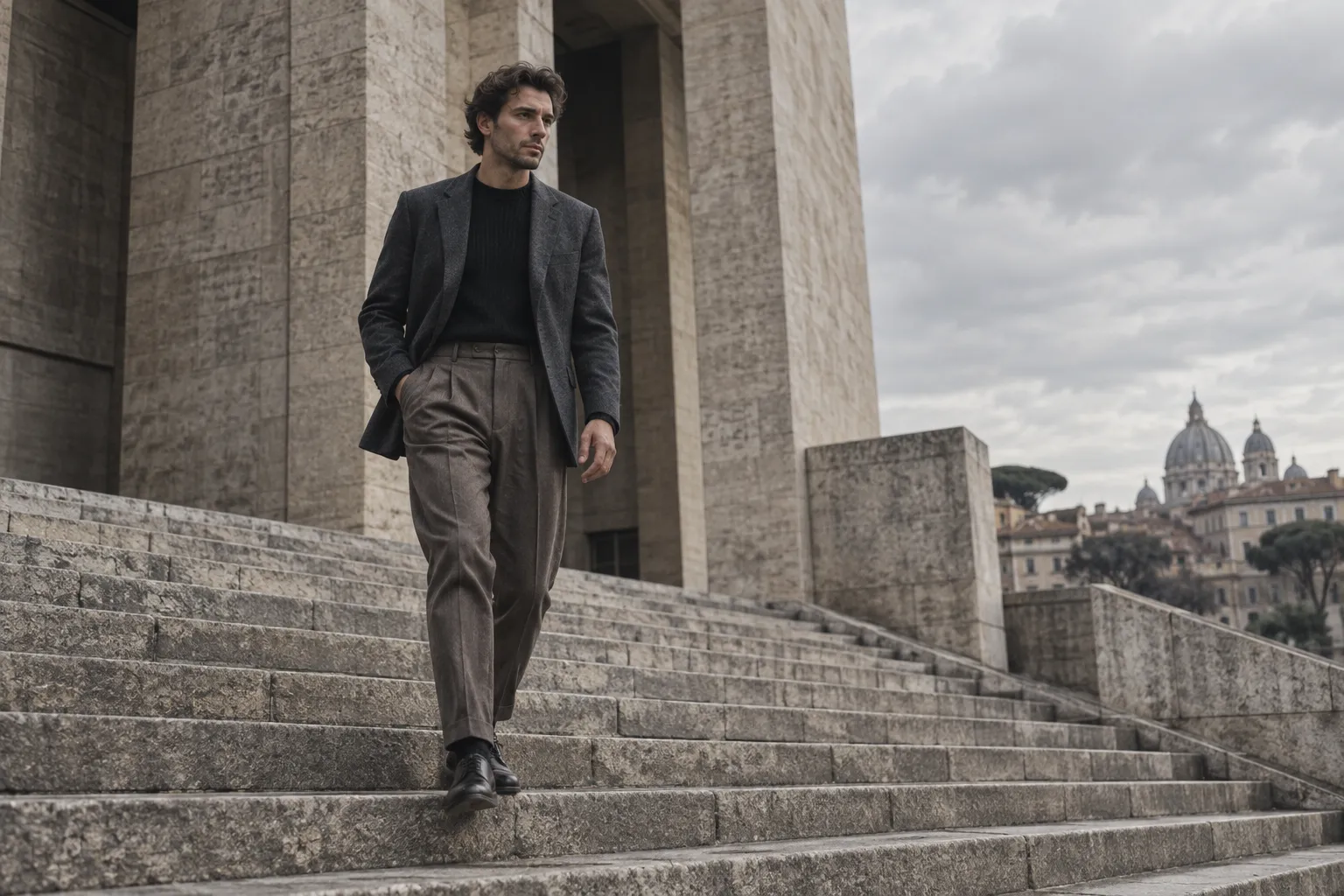
The most useful development in modern tailoring is not a new lapel shape or a seasonal colour. It is the return of ease. A jacket can still sharpen the body without holding it rigid, and trousers can move without collapsing into sportswear. The point is not to look less dressed. It is to make tailoring belong to an ordinary day.
Start with the shoulder
Soft tailoring begins where the jacket meets your body. A lightly padded or unpadded shoulder follows the natural line rather than constructing a new one. That makes the jacket easier to wear with a knit polo, an Oxford shirt or even a clean T-shirt.
The fit should still be deliberate. The shoulder seam belongs close to the end of your shoulder bone, the collar should sit against the neck, and the front should close without pulling. “Relaxed” describes the construction and silhouette—not an excuse for the wrong size.
Let the trousers answer the jacket
A softer jacket looks stranded above very narrow trousers. Give the lower half enough volume to balance the chest and hem of the jacket. A medium or slightly higher rise, a clean line through the thigh and a gentle taper are more adaptable than either extreme.
Begin with a single forward pleat if you want room without visual bulk. The crease should fall cleanly toward the shoe. At the hem, a small break works with loafers and derbies; a cleaner, shorter finish feels more contemporary but demands accurate length.
Use texture instead of noise
When the silhouette is quiet, material does more of the work. Wool is especially useful because its fibre structure gives it elasticity, wrinkle recovery and moisture management. In practical terms, that means a hopsack or tropical-wool jacket can retain its shape while feeling less formal than a smooth business suit.
Keep the palette narrow and let surfaces separate the layers: charcoal flannel, a cream knitted polo and dark brown suede already create enough distinction. There is no need for an assertive pattern in every piece.
A three-piece formula that travels
- An unstructured jacket in charcoal, navy or deep olive.
- A knitted polo or fine-gauge crew neck in cream, grey or tobacco.
- Mid-rise trousers with room through the thigh and a restrained taper.
Add dark loafers for dinner, suede derbies for a workday or minimalist leather trainers for the most casual version. The formula survives because each piece can leave the outfit and work elsewhere.
Keep the intention visible
Soft tailoring is successful when the comfort is felt but the decisions remain visible. Press the trousers. Keep the knit collar in shape. Choose a jacket length that covers the seat rather than chasing a cropped trend. Ease works because it is controlled.
The result should not announce that you are wearing tailoring. It should simply make the rest of the day look considered.
Sources
- What is the Wool Fibre? — The Woolmark Company
- Superfine: Tailoring Black Style — The Metropolitan Museum of Art